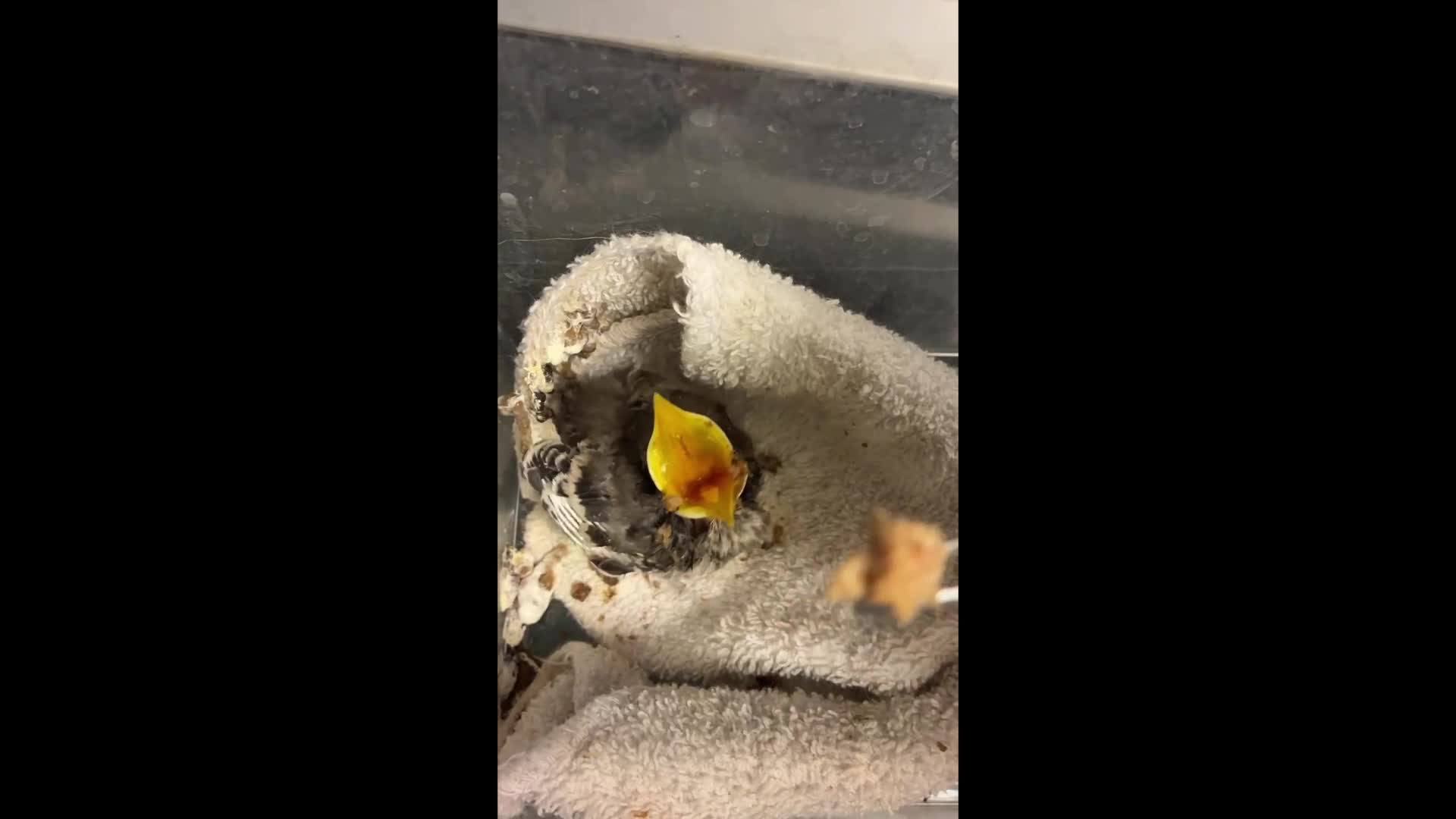
It may look simple, but hand-feeding a baby wild bird is a highly specialized skill that requires training, experience, and the proper permits.
Different species of birds have very specific dietary needs. What is healthy for one species can be harmful or even fatal to another. Baby birds often require carefully prepared formulas, precise feeding schedules, and specialized feeding techniques to ensure they receive proper nutrition and avoid complications such as aspiration, malnutrition, or developmental issues.
Many well-intentioned people try to help by feeding baby birds bread, milk, seeds, or other household foods, but these can cause serious health problems and reduce a bird’s chances of survival.
Licensed wildlife rehabilitators receive training to identify species, provide appropriate diets, monitor growth and development, and prepare young birds for eventual release back into the wild. In many cases, baby birds also need to learn natural behaviors and avoid becoming imprinted on humans, which is critical for their long-term survival.
If you find a baby bird, the best thing you can do is contact a licensed wildlife rehabilitator for guidance before attempting to feed it yourself. Sometimes the bird may not need rescuing at all, and expert advice can help ensure the best outcome.
Every baby bird deserves the chance to grow up healthy and wild. By leaving specialized care to trained and licensed rehabilitators, you help give them that opportunity.
Check out the video on our YouTube Channel: https://youtu.be/mkpNkpT597w